

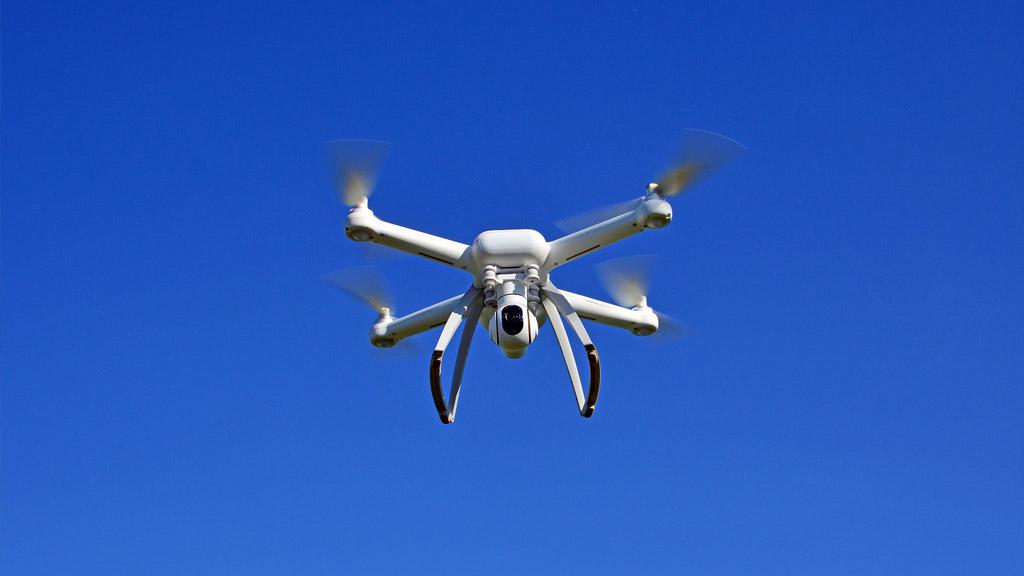
The Regional Ministry of Universities completes the €20 million investment committed to this strategic hub for the aerospace sector located in Aerópolis
The Governing Council has authorized the Regional Ministry of Universities, Research and Innovation to pay the full €5 million budgeted for 2026 in a single payment for the construction of the Seville Center for Innovation in Unmanned Aerial Vehicles and Urban Air Mobility (CUAM), an infrastructure project promoted by the Andalusian Regional Government in conjunction with the University of Seville (US).
This contribution, co-financed by the Andalusia ERDF 2021-2027 Program, will be used to acquire equipment for the development of new technologies and to hire the research staff responsible for this work. These five million euros are in addition to the six and nine million euros already transferred in 2023 and 2025, respectively, by the regional government to the academic institution for its development. This completes the total investment of 20 million euros committed by the Regional Ministry to support this strategic hub for the Andalusian aerospace industry, with applications in transportation, surveillance, agriculture, emergency services, and infrastructure inspection, among others.
This facility focuses on generating knowledge that will allow Andalusia to maintain its scientific and technological leadership in unmanned aerial vehicle (UAV) technologies for civilian use, and in particular, for their application to urban air mobility, enabling the intelligent and safe autonomy of vehicles and systems. Furthermore, it aims to facilitate the transfer of the knowledge generated by this initiative to companies, with a special emphasis on SMEs, through a specific plan for disseminating and transferring results to promote research and innovation within the business sector. In short, this new innovation center will strengthen and support the Andalusian aerospace sector, enabling it to diversify into new products, all with a significantly higher added value than the traditional manufacture of aerostructures.
The project is located in the Andalusian Aerospace Technology Park (Aerópolis) and in several facilities at the Tablada Barracks, provided by the Air Force and Space Corps. It will include various laboratories, among them an electric motor and modeling test bench, a laboratory for sensorized structures for urban air mobility (UAM), a laboratory for coatings and nanostructures for UAM, and another for clean propulsion systems. The center, which is being developed in phases, will be completed with a flight operations and training facility.
With the funding granted in 2023, the University of Seville completed a purchase in 2024 of a building on the Aerópolis site for €814,677. This building is currently in its final stages of adaptation to house part of the facilities. Furthermore, the funding awarded in 2025 was used to adapt the infrastructure of the Tablada Air Base and prepare it for flight control, laboratory operations, and a vertiport.
Andalusia, the second-largest region in the drone sector
The high-tech aeronautical industry, comprised of unmanned aerial vehicles (UAVs) or drones, is one of the sectors with the greatest future potential, due to the numerous applications of these aerial robots in fields as diverse as agriculture, surveillance, infrastructure inspection, transportation, and fire control, among many others. Its growth is also exponential, driven by constant technological advancements applied to improve its performance and extend its use to a large part of the productive and service sectors.
Spain ranks among the top ten global leaders in this branch of the aerospace sector, and Andalusia is one of the key drivers of this growth. After Madrid, the region has established itself as the second most important community in terms of both operators and pilots, according to the Strategic Plan for the Development of the Civil Drone Sector in Spain 2018-2021. According to this document, there are more than 3,000 drone operators registered nationwide, 550 of which are based in Andalusia. Furthermore, this plan anticipates that the fleet of drones used professionally will exceed 51,400 aircraft in 2035 and reach 53,500 in 2050. The economic impact of this growth is valued at €1.22 billion in 2035 and €1.52 billion in 2050.
The ecosystem of unmanned aerial vehicle (UAV) projects in Spain is very dynamic and rapidly growing, although it is true that none of the other centers are linked to a public university.
For its part, the European Commission estimates that, within 20 years, the drone market will employ more than 100,000 people in the EU, with an economic impact of around €10 billion.
In this scenario, the Andalusian region is well-positioned, as it has the knowledge, companies, and professionals that place it in a prominent position, but above all, it has the institutional commitment to continue advancing its development. The sector, strategic for the region, also benefits from the Andalusian Aerospace Strategy.
€72 Million Investment in Aerospace
To strengthen the aerospace sector, the Regional Ministry of Universities is also involved in the development of the ‘SpaceInnova Andalucía’ program, a Public Procurement of Innovation (PPI) initiative with a budget of €20 million within the framework of the Andalusia FEDER 2021-2027 Program. This program aims to identify innovative pseudo-satellite solutions for application in other areas of activity, such as emergency response, firefighting, and environmental management.
Additionally, €15 million from the Andalusia FEDER 2021-2027 Program will be allocated to the development of aircraft that reduce emissions and noise in the aerospace sector, in line with the European ‘Clean Aviation’ initiative. These two lines of action complement the €17 million investment already made in the Unmanned Aircraft Experimentation and Certification Center (CEUS), located in Moguer (Huelva). All these funds, together with the CUAM investment, total €72 million to strengthen innovation and knowledge transfer in this sector.
Once completed, this infrastructure will join other unique and strategic facilities equipped with cutting-edge technology, including the Advanced Center for Aerospace Technologies (CATEC), located in La Rinconada (Seville); the Experimental Flight Center with Unmanned Aircraft (ATLAS), located in Villacarrillo (Jaén); and the CEUS project, jointly promoted by the Regional Government of Andalusia and the Spanish Government. These facilities are complemented by other initiatives such as the European Space Agency’s (ESA) technology-based startup incubator, in collaboration with the Spanish agency, in Seville and promoted by the Ministry of Universities, the Seville City Council and the Advanced Center for Aerospace Technologies, as well as the Integrated Aerospace Vocational Training Center of La Rinconada built by the Regional Government.


